lettuce

Also known as

Salad greens, Salad patta

Description

Lettuce is a green leafy vegetable. They have green crispy leaves. When these leaves are broken they secrete white milky liquid which is bitter in taste. Mild in flavour, it has been used over the centuries as a salad green. Lettuce can be of various varieties and some of the popular ones are as follows:

Iceberg:
They resemble cabbage and are the mildest in flavour. They have a crunchy texture and high water content. However, they are low in nutrient value.

Lollo Rosso:
It has tender, delicate leaves and is mild in flavour.

Romaine/ Cos Lettuce:
It has sturdy leaves and a firm rib. It can tolerate heat more as compared to other varieties.

Butterhead:
Its leaves have a buttery texture and have loose leaves.

Chinese Lettuce:
They have long leaves, are usually whitish in colour and have a slightly bitter flavour. They can be used in stews and stir fried dishes also apart from being used in salads.

Torn Lettuce

Lettuce should be washed and dried properly. The leaves should be torn with hands gently so that juice inside it does not turn it brown. These whole leaves are used in salads, sandwiches ,hamburgers and tacos.

Iceberg Lettuce

Iceberg Lettuce is pale in colour and is firm and crunchy, hence it is named so. It is the best variety of crisp-head lettuce. It has high water content which makes it refreshing. Iceberg makes crisp, fresh, tasty base for salads. Iceberg lettuce can be used chopped, torn or shredded in recipes as required. It is good for dieters as it is low in calorie and has high water content. High water content also makes it a good alternative for cleaning bowels of your system and keeping the system clean.

Lettuce Head

It can be referred to Iceberg which is also called Head of Lettuce. Alternatively, any variety of lettuce with a firm head which holds the stems or leaves can be called as Lettuce Head. Lettuce head can be blanched and used in stir fry recipes.

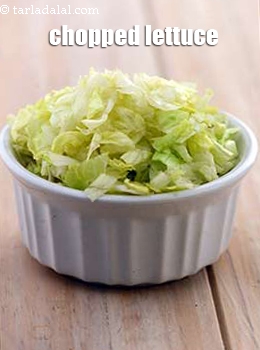
Chopped lettuce
Use a plastic knife in order to chop lettuce. The crisp head of lettuce should be placed on chopping board and cut from centre. Make four equal halves and chop these wedges into vertical strips .Combine these vertical strips , place them horizontally on board and finely chop them in horizontal way uniformly. This will give you finely chopped lettuce that can be used to garnish soups, vegetables, meats , gravies and added in fillings for making a sandwich wrap. To roughly chop lettuce, place the head of lettuce on chopping board and slice them unevenly in vertical stripes first and then make horizontal cuts.
Curly red lettuce
This variety of lettuce is usually green leaves with red edges and curls. It can be used chopped, torn or shredded in recipes as required. It goes very well in stir fry recipes. Always place in ice cold water so that it remains crisp in texture.
Iceberg lettuce
Description

Iceberg lettuce is a variety of crisp head lettuce which is widely consumed across the world. It is characterized by tightly furled, crunchy leaves and a mild, sometimes watery flavour. It is sturdy with a large, firm head that looks like a small green cabbage .The rather thick leaves are nicely crispy and have the advantage of remaining firm long after being picked.There are many uses for iceberg lettuce, including salads, some ethnic cuisine, and garnishes.

Many grocers carry iceberg lettuce, and it is also possible to grow the food at home. There are six basic categories of lettuce, divided roughly by their physical properties. he high water content and crisp texture can make iceberg lettuce seem very refreshing; it is often cut into wedges and ribbons for salads and to garnish foods which might be lacking in greens otherwise.

Chopped Ice berg Lettuce

Lettuce should be washed very well since the leaves and stems tend to collect sand and soil. Hold the head of lettuce in both hands with the root end toward the counter. Smack it hard right on the root end and the core will come right out, leaving you with nice leaves. Put the washed leaves on a chopping board and chop them in small 1-2 inch sized pieces.

Blanched iceberg lettuce

Cut the large leaves in pieces. Blanching can be done by boiling or steaming. Put the leaves in a wire basket, submerge them completely in the boiling water, cover with a lid, and blanch for 3-4 minutes. To blanch by steaming, put the vegetables in a steamer basket and suspend it above an inch or two of boiling water. Cover the pot, and begin timing(3-4 minutes) as soon as steam starts to escape from under the lid. With either method, shake the basket a couple of times to ensure that all vegetable surfaces are exposed to the heat. After the allotted time, remove the basket, and plunge the vegetables into a bowl of ice water to stop the cooking.
Once cool, remove them, drain thoroughly and add to your recipe.

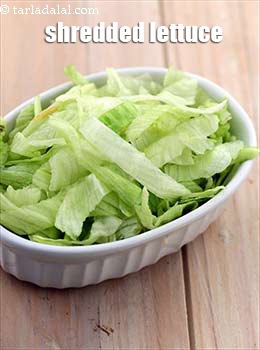
Shredded iceberg lettuce

The leaves can be shredded coarsely in a shredded or manually, using a sharp knife. Cut the greens in thin slices and then break up the pieces in shreds using fingers. Shredded lettuce is used as a garnish , in coleslaws or merely to reduce the cooking time.

Torn iceberg Lettuce

Remove the leaves from the stalks and tear them roughly with your hands in small pieces. The torn lettuce are usually used for blanching or as a base for salad basket.

How to select

When you select a head of iceberg lettuce in the store, look for a firm head which has no slime or areas of discoloration. They should be displayed in a chilled section in the refrigerator case to prevent them from wilting and becoming bitter.

Culinary Uses

· Drizzle iceberg lettuce with olive oil and lemon juice and serve as a salad.
· Iceberg lettuce makes a beautifully crisp, fresh and tasty base for salads.
· Serve steamed lettuce with black-eyed peas and brown rice for a Southern inspired meal.
· Use lightly steamed, cooled and chopped iceberg lettuce as a filling in your sushi vegetable rolls.
· Healthy sauté iceberg lettuce with tofu, garlic and crushed chili peppers for a meal that will definitely add spice to your life.

How to store
Store unwashed lettuce in a damp paper towel in a plastic bag. They should be placed in the refrigerator crisper where they will keep for three to five days, but the sooner they are eaten, the better they will taste.

Health benefits

· Low in saturated fat and cholesterol (practically none) it's a good source of iron, vitamin B6, K, A, and C.
· Iceberg lettuce are an excellent source of folate and a very good source of vitamin B6 and antioxidants called both of which are needed to keep levels of homocysteine, a potentially dangerous molecule, low.
· Iceberg lettuce is high in dietary fiber, and contains traces of omega fatty acids, which is important for allover health. Folate is another benefit that iceberg lettuce provides, which helps fight heart disease.
· In addition, lettuce are a very good source of riboflavin, another important B vitamin for cardiovascular health since it is necessary for the proper functioning of B6.
Romaine lettuce
Romaine is also called Cos or Manchester or Roman lettuce. It has elongated head with long , dark green crisp, sturdy leaves and has firm rib running in the centre. The older , outer leaves of this variety has thick ribs containing milky fluid which gives it a bitter taste. Romaine lettuce can be used chopped, torn or shredded in recipes as required. It has high content of Vitamin C and fibre which helps in reducing cholesterol levels. It is low calorie food as it has high water content.
Shredded lettuce
Pick a crisp , fresh , head of lettuce and clean it under running water and pat it dry. With a sharp knife cut the head down the centre and cut half in half again. If you want to shred smaller pieces cut these half in half again. Begin shredding by cutting the wedges of these small pieces. Work from one side to the other side and loosen the shred. Alternatively, take individual leaves and roll like a cigar. Now, using aknife, cut finely from the rolled ends to shred. These shreds are mostly used in addition to other vegetable and meat preparations. They are also used in leafy vegetable salads in combination with cabbage.


How to select

Lettuce should be fresh and green in colour. Ensure there are no black, slimy spots on the leaves of lettuce and they are free from any tears and blemishes. Their edges should not be discoloured or yellow-brown in colour. The head of lettuce should be firm.

Culinary Uses

· Lettuce is commonly and most popularly used in fresh garden salads or green salads. Use a combination of varieties of lettuce, vegetables and dressings of your choice to make varieties of salads.
· Use as a base in open sandwiches, burgers, hot dog rolls etc. It gives a nice crunch to the recipe.
· Lettuce leaves can be blanched and then used as a base to make wraps and rolls. Use fillings like flavoured rice, meats etc.
· Lettuce goes well with any vegetables, meats, soy products, fruits, nuts, whole grains, and cheeses.

How to store
Lettuce should be washed and dried to remove excess moisture. Then, it should be stored in refrigerator wrapped in plastic bag or damp cloth so that it remains crisp. It is recommended that lettuce should be prepared on the very day it is bought. It should be stored away from ethylene products like apples, pear , bananas, since they can cause the leaves to turn brown.

Health Benefits
· Lettuce is fat free and low in calories.
· It is an excellent source for Vitamin A and folic acid.
· As it has iron and phosphorus, it adds nutritional value to the meal.
· It has vitamin C content which prevents oxidation of cholesterol in heart.
· Fibre contained in Lettuce helps to lower the cholesterol levels.
· The bitter flavoured lettuces and the ones with pigmented leaves are rich in antioxidants.


Related Links

Pak choi
Cos lettuce
Subscribe to the free food mailer

Grab Green Peas - Choc-A-Block of Nutrients

Missed out on our mailers?
Our mailers are now online!

View Mailer Archive

Subscribe now

Privacy Policy: We never give away your email